Charlotte, North Carolina
Charlotte Fire Damage Restorationsmoke, soot, water and odor
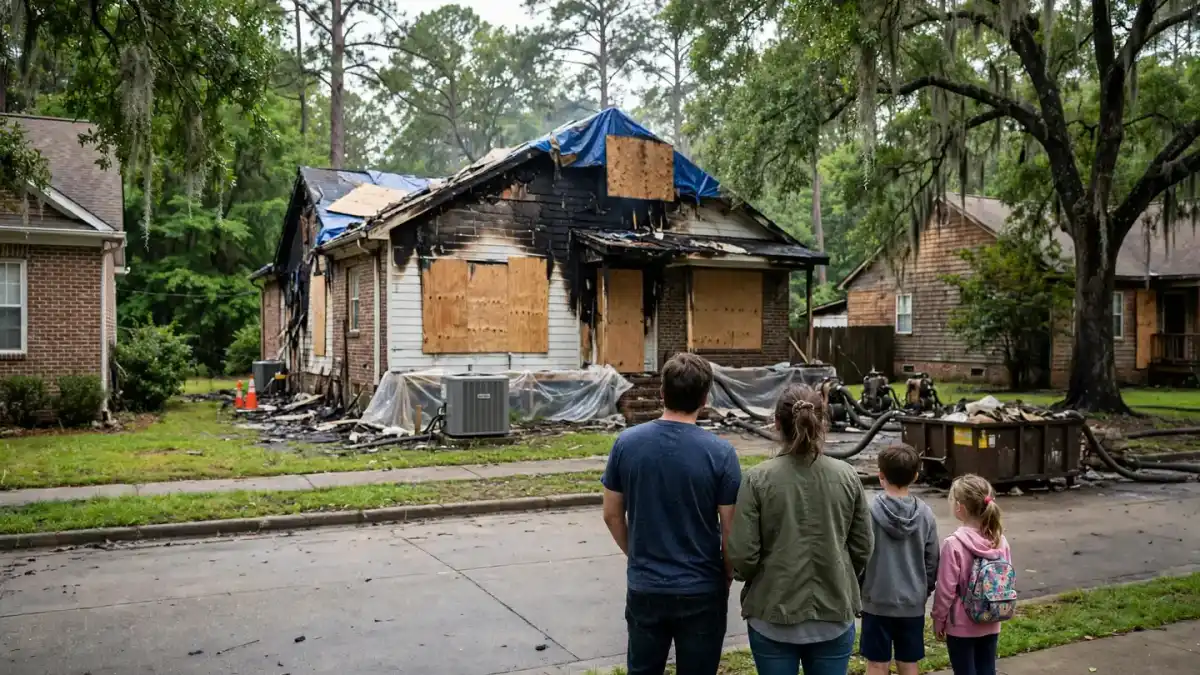
A house fire leaves more than burned rooms. Smoke spreads residue through the whole home, firefighting water soaks floors and crawlspaces, and odor settles into everything soft. One call connects you with an independent local restoration contractor who can talk through securing, drying, cleaning and restoring your Charlotte home.
Referral by phone only: your call goes to an independent Charlotte restoration contractor.
- Smoke and soot cleanup
- Water from firefighting
- Odor removal
- Board-up and roof tarping
- Call-in onlyYour own call connects you to a contractor who speaks with you on that call.
- Independent local contractorsWork is done by independent restoration contractors, not by this website.
- 29 Charlotte ZIP codesCoverage from Uptown to Ballantyne and University City.
- No forms, no follow-upWe do not collect your details or contact you later.
Key facts: Charlotte Fire Damage Restoration
- Smoke residue can travel through a whole house, far beyond the room where the fire burned [1].
- Drying water-damaged materials within 24 to 48 hours helps prevent mold growth [2].
- Fire repairs in Charlotte that involve structure, wiring, plumbing or HVAC are permitted by Mecklenburg County Code Enforcement [3].
- Calls from 29 Charlotte ZIP codes can currently be connected to an independent contractor.
What are you dealing with?
Start with what you see in your home
Pick the problem that matches your situation to read a plain-language guide.
 Common
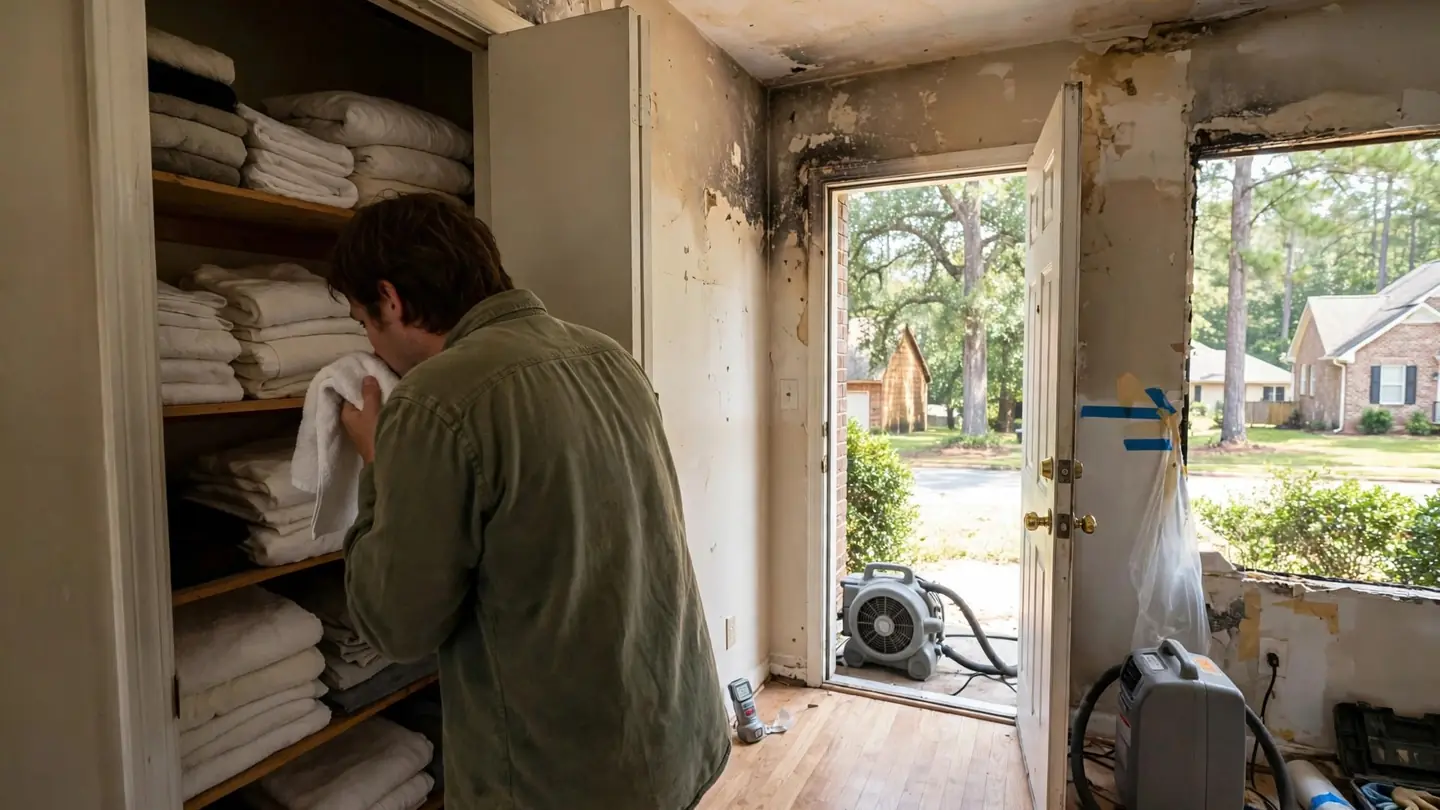
Black marks on walls and ceilings
What soot patterns mean and why wiping makes it worse.
What to do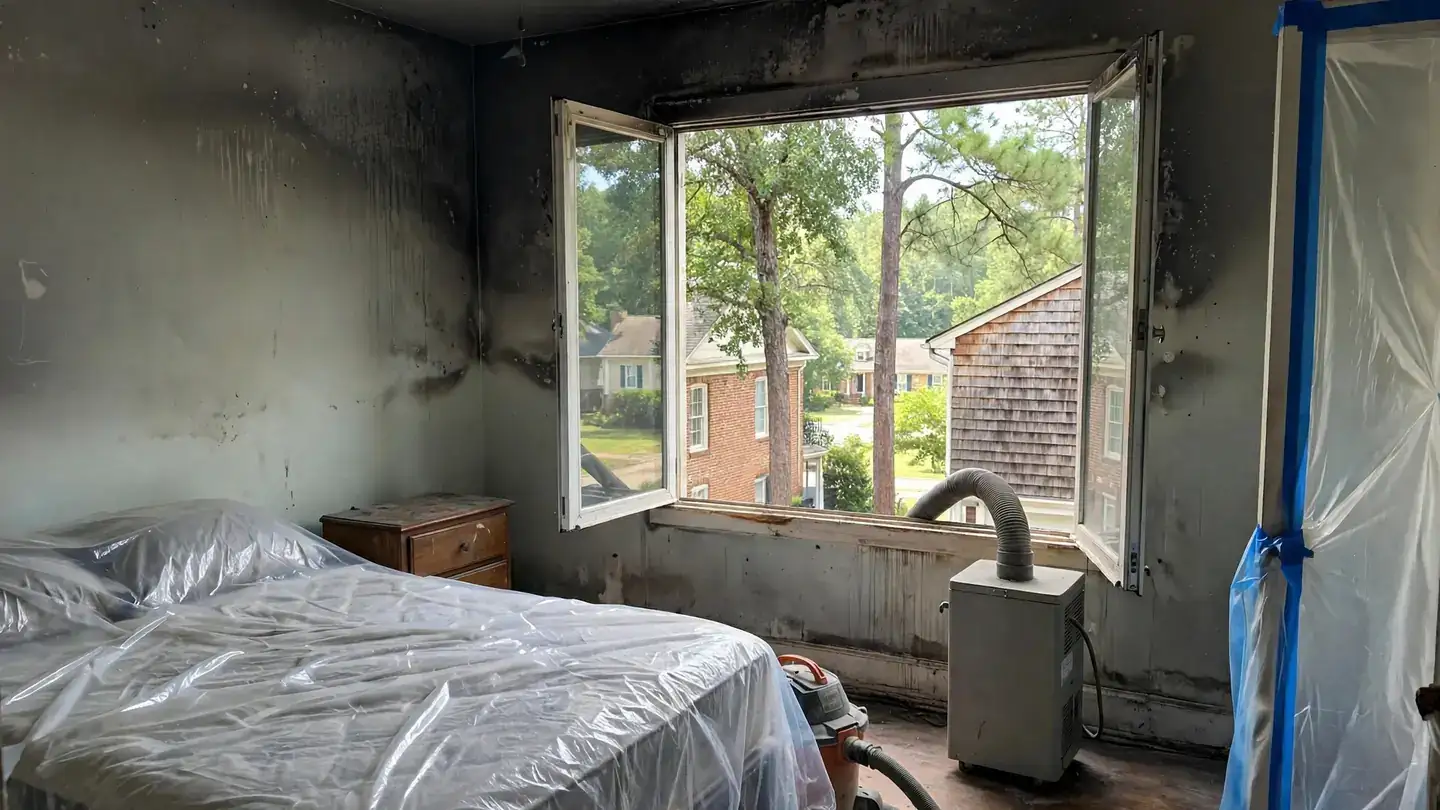
Restoration services
Fire restoration services for Charlotte homes
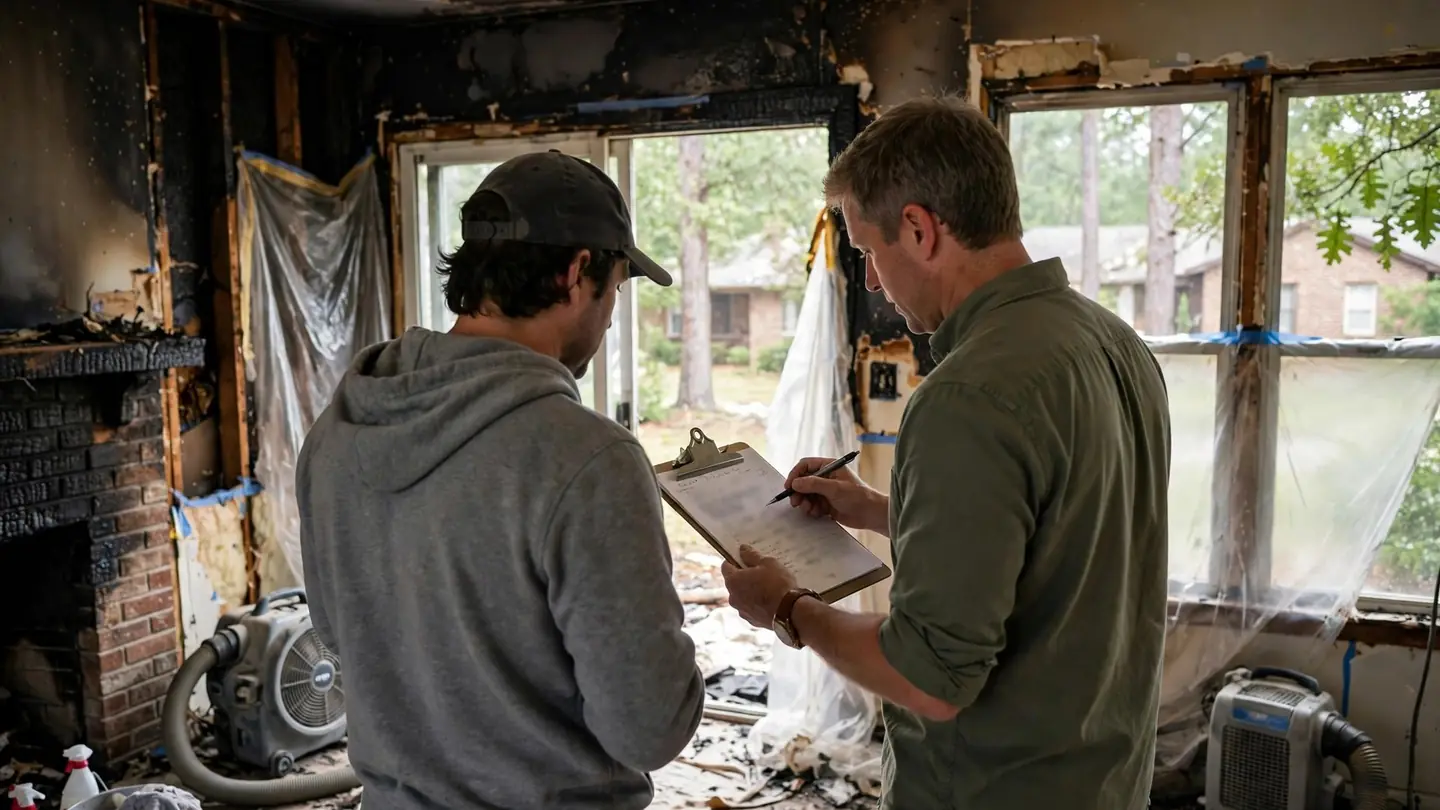
Each fire is different. These are the main jobs a restoration contractor handles after a residential fire in Charlotte.
 Start here
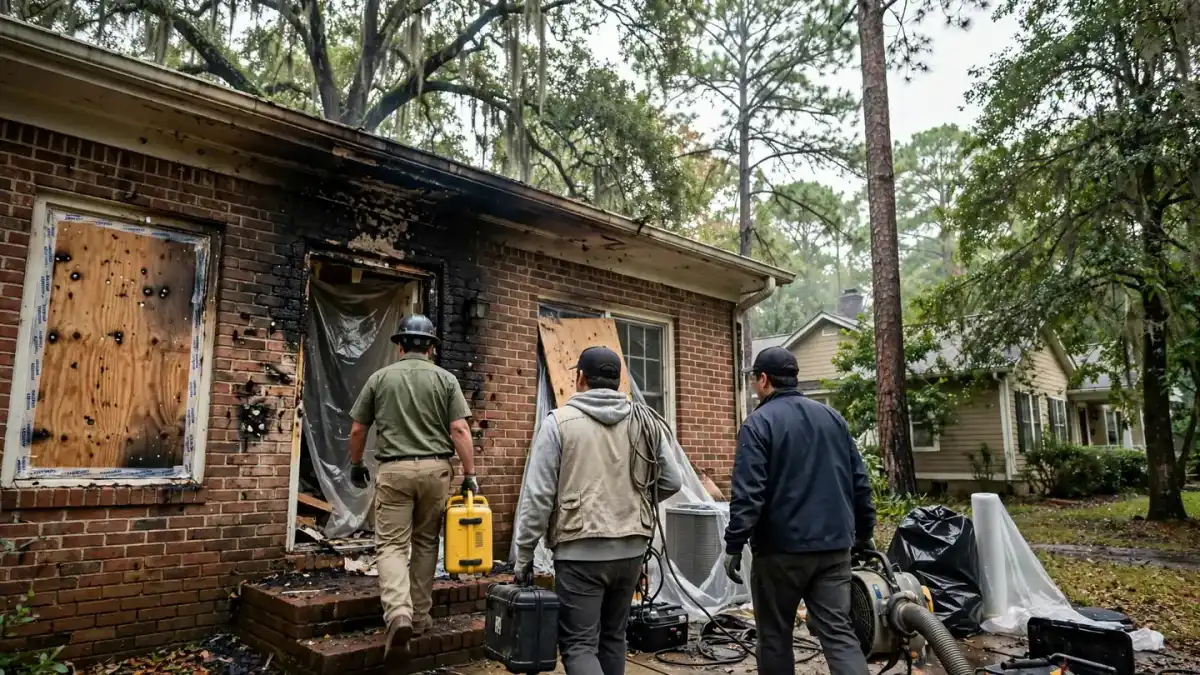
Board-Up and Tarping
Covering broken windows, forced doors and vented roofs after a fire to keep out rain, animals and intruders.
Learn more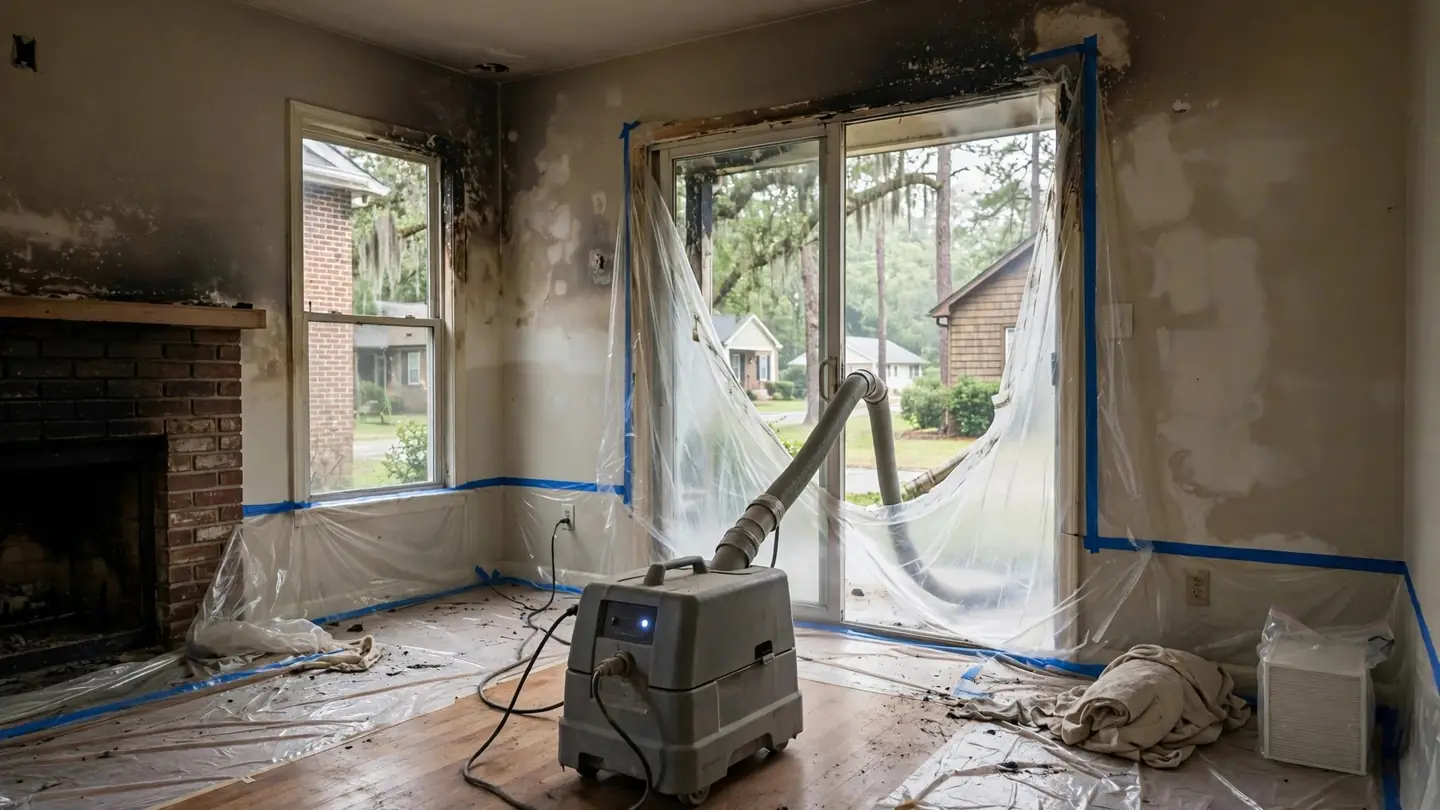
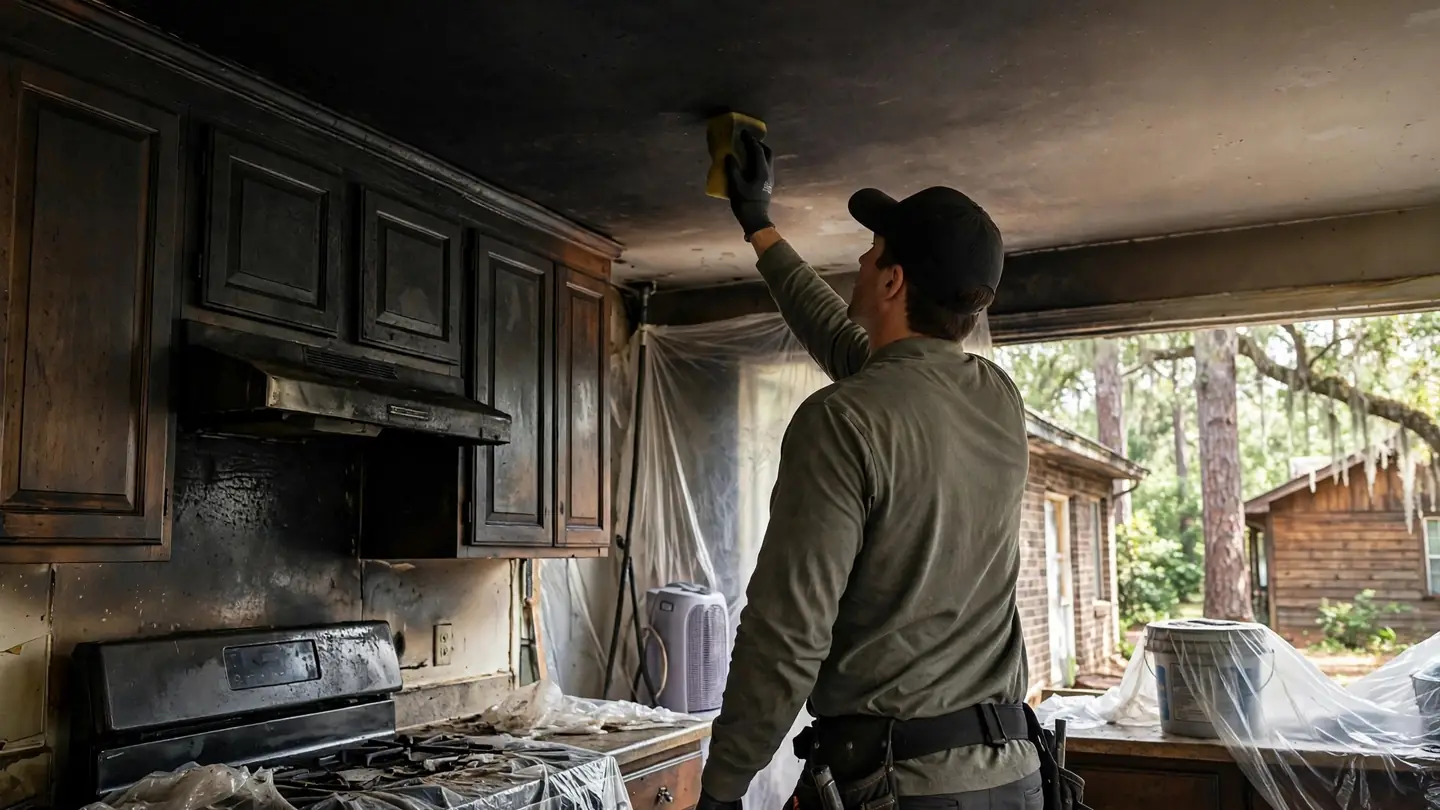
Before anyone goes back inside
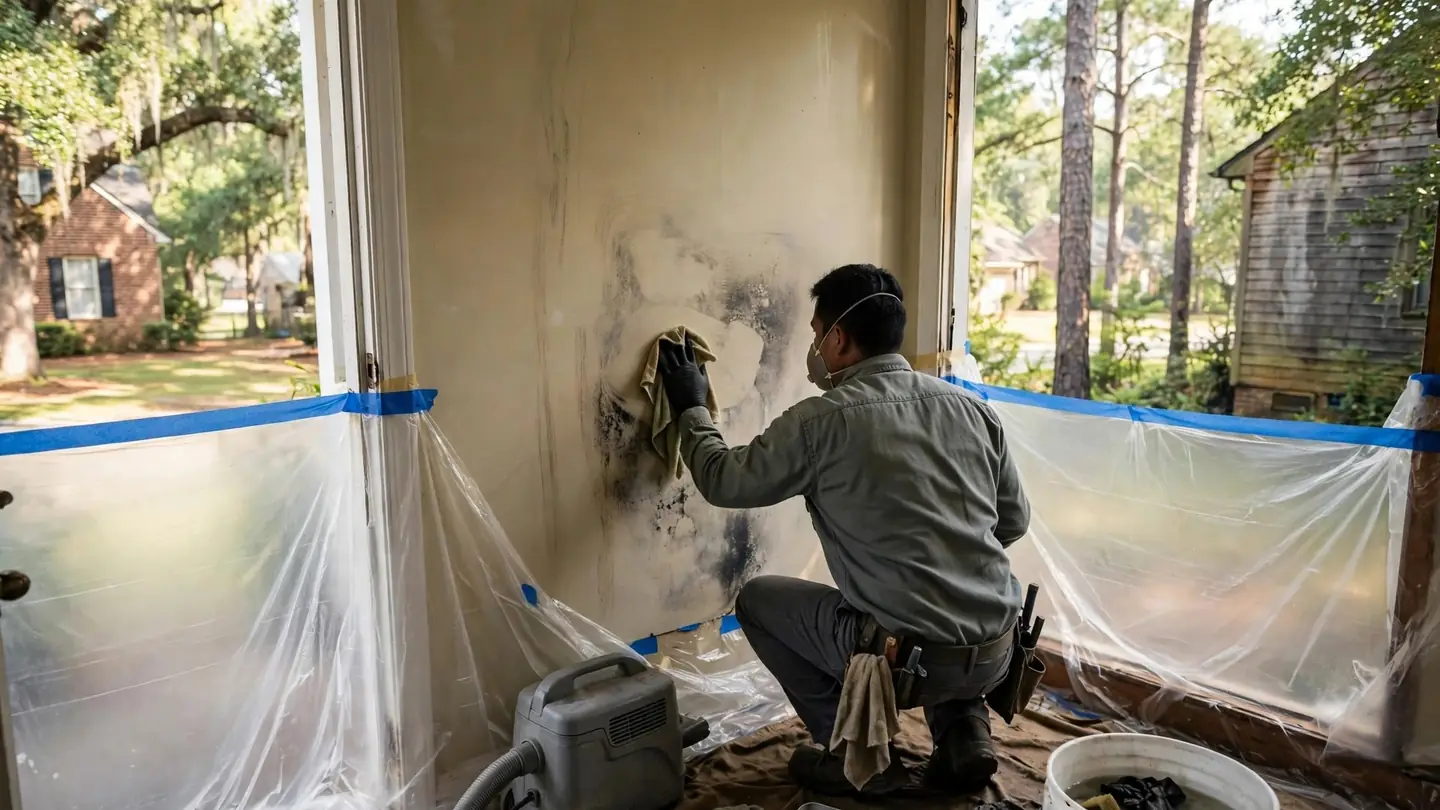
Wait until the fire department says the house is safe to enter. Stay out from under sagging or stained ceilings, do not turn on power or gas yourself, and leave the heating and cooling system off so it does not spread soot.
- Wait for the fire department's release
- Keep away from sagging ceilings
- Leave utilities off until checked
- Do not run the HVAC system
- Wear an N95 respirator if you must enter
Why call this way
A simpler path through a Charlotte house fire
One call, no forms
You talk directly with an independent local restoration contractor on the call you make.
Plain answers first
Guides explain smoke, soot, water and odor in everyday language before any work starts.
Local housing in mind
Neighborhood pages cover plaster bungalows, mid-century ranches and newer two-story homes.
Nothing follows you
We do not collect your details, call back, text or email you after the call.
How fire damage spreads
Why one room's fire becomes a whole-house job
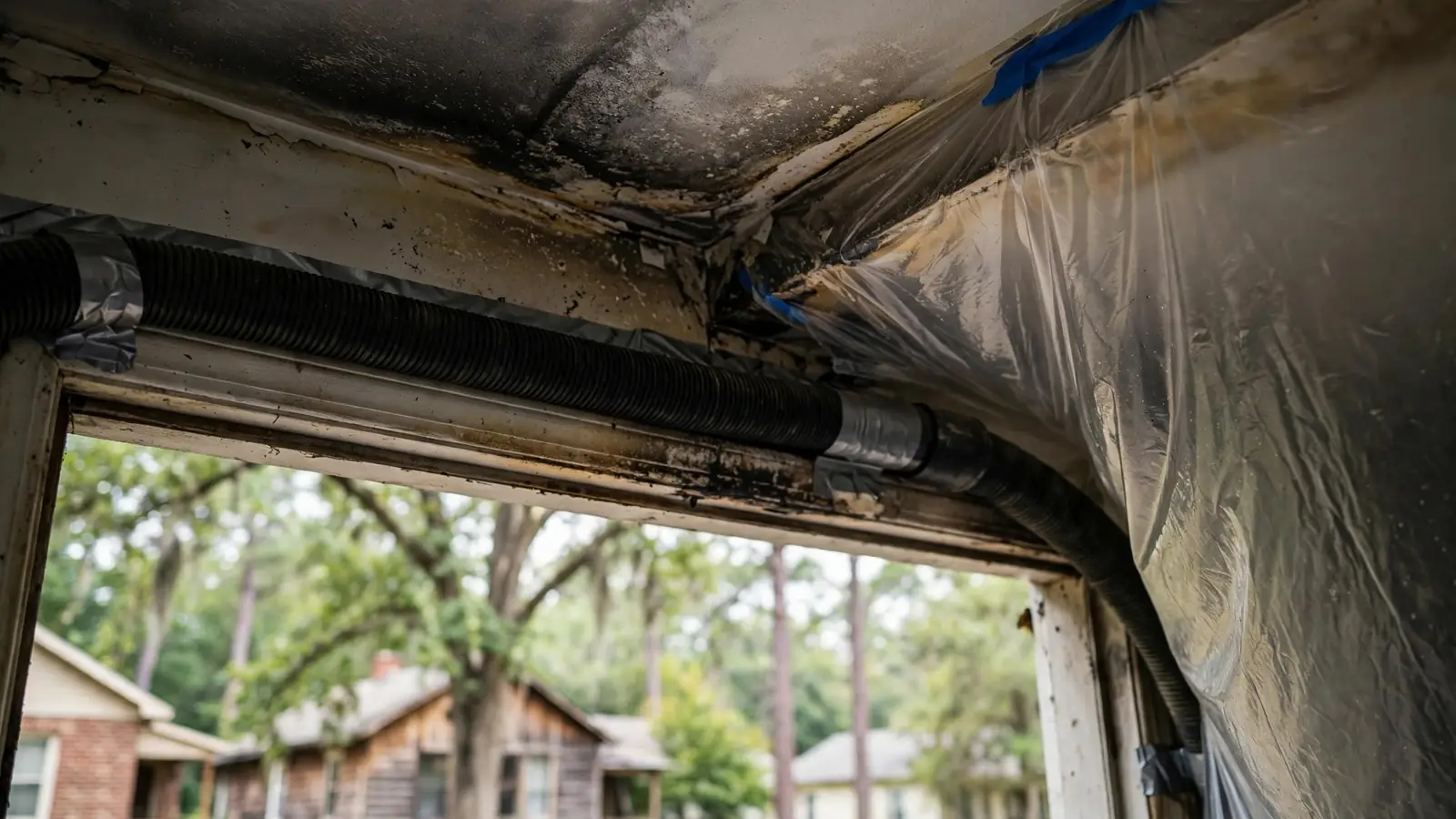
Flames may stay in one room, but smoke and heat do not. Hot gases rise and push through doorways, stairwells, return grilles, attic openings and wall cavities, leaving a film of residue in rooms the fire never touched. A kitchen fire can leave soot on an upstairs bedroom ceiling and odor in closets at the far end of the house.
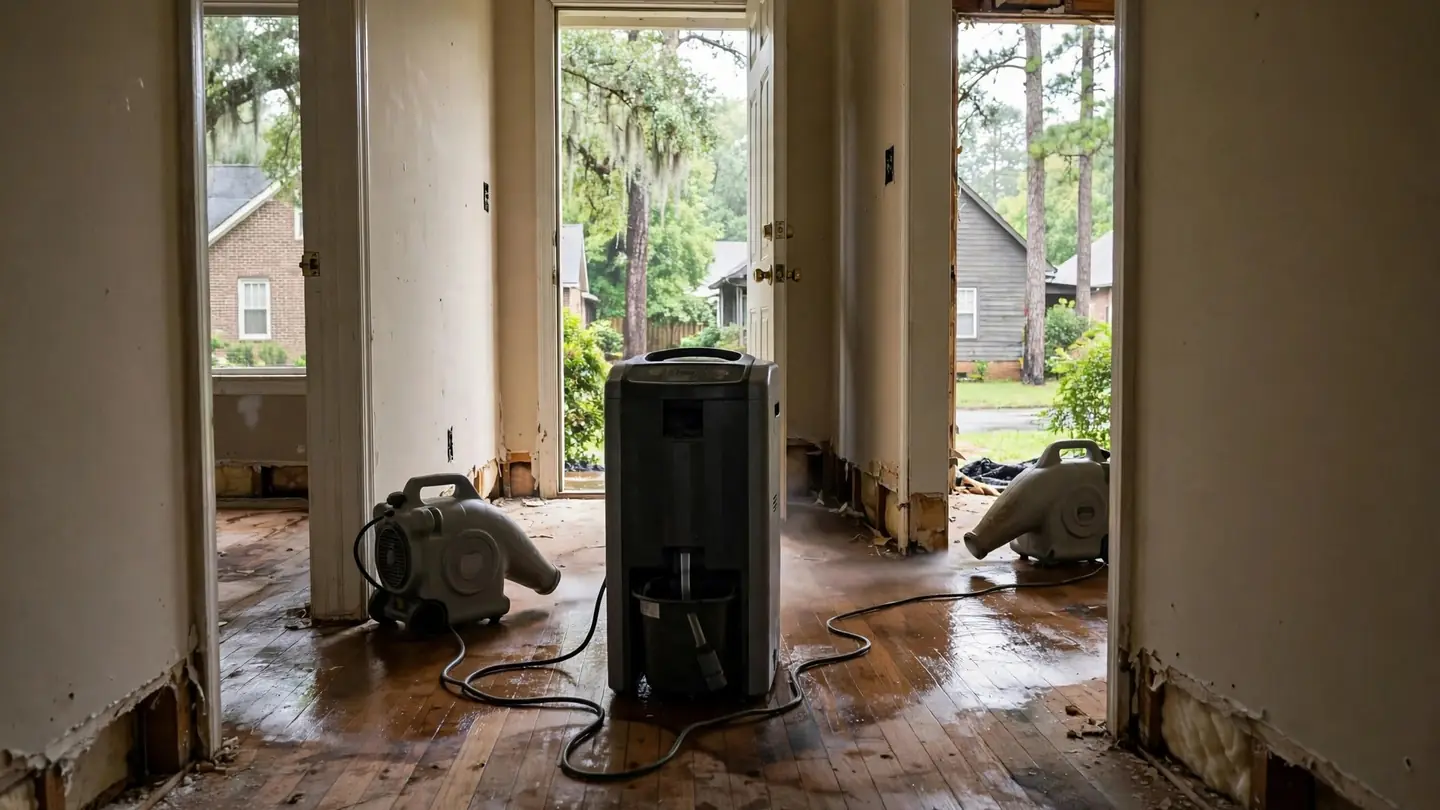
Then there is the water. Fire hoses soak floors, ceilings and insulation, and in Charlotte's many crawlspace homes, water drains under the house where it can sit unseen. That combination of smoke, soot and water is why careful assessment of every room, the attic and the crawlspace comes before any cleaning plan.
How a call works
One call, an independent contractor on the line
This website is a call-in referral service. When you call the number on this page, your call is connected to an independent, local restoration contractor who speaks with you on that same call. Describe what happened, where the fire started, whether there is water and whether the house is open to the weather.
The contractor can explain how they would approach the job, what they would look at first and what you can do in the meantime. Anything you arrange happens between you and the contractor during the call. We do not take forms, collect your details or call you back later.
- No forms or sign-ups
- No callbacks or marketing
- You decide what happens next
Restoration in pictures
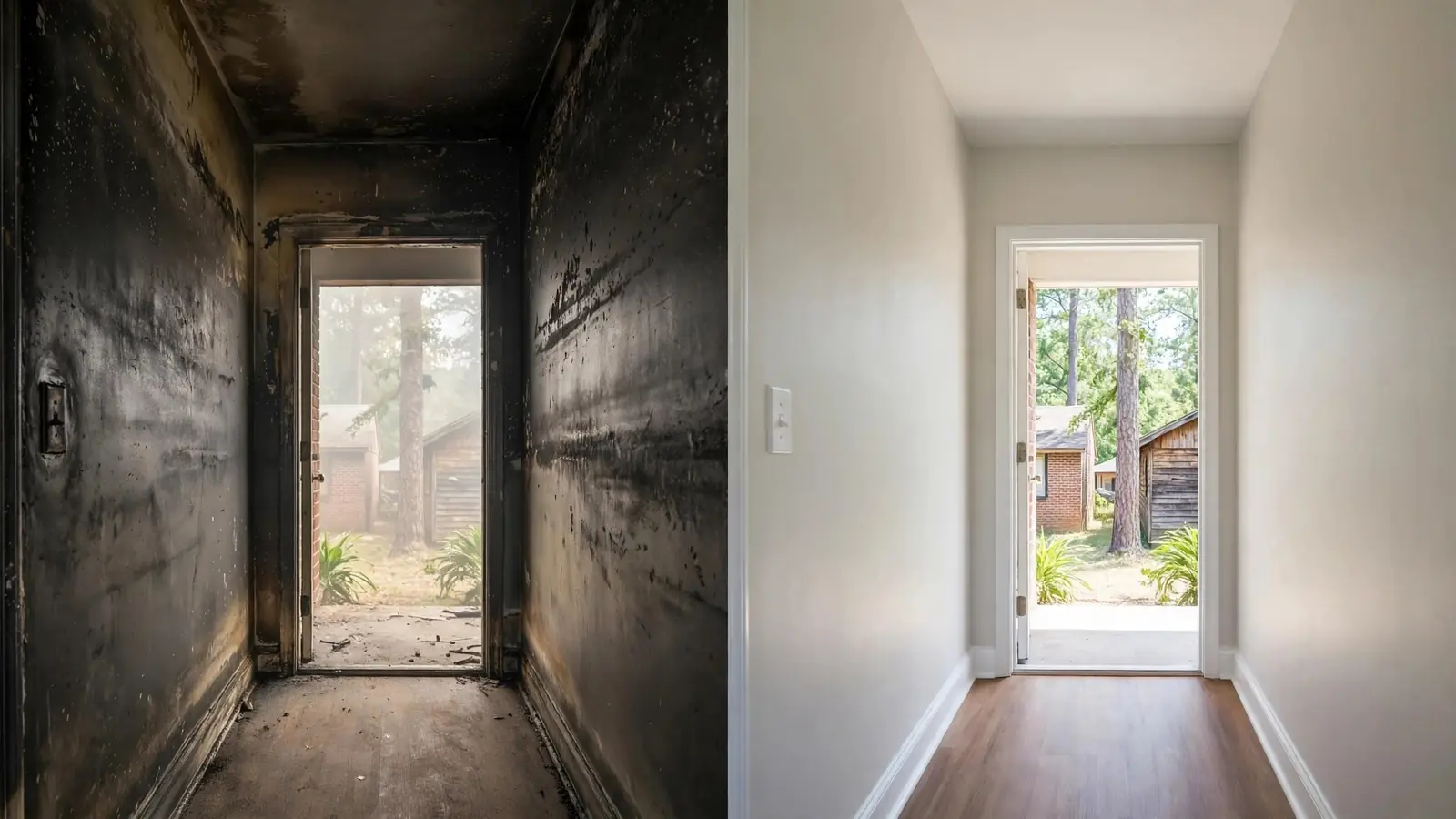
From smoke-darkened to restored
Smoke damage often looks permanent. Careful dry [soot removal](/services/soot-removal/), cleaning, sealing and painting can bring many rooms back.
Typical results
Before and after: common fire restoration jobs
Before and after: the kinds of work restoration contractors do after a house fire.
 BeforeAfter
Kitchen after a cooking fire
Greasy soot removed from cabinets, hood and ceiling.
- BeforeAfter
Smoke-filmed hallway
Gray film lifted, walls sealed and repainted.
 BeforeAfter
Sooty brick fireplace
Masonry cleaned without damaging the brick face.
 BeforeAfter
Bedroom soaked by fire hoses
Water extracted, pad removed and room dried.
 BeforeAfter
Openings secured
Broken windows and door boarded and locked.
 BeforeAfter
Attic insulation replaced
Sooty insulation removed, framing cleaned and sealed.
Dry and clean before you rebuild
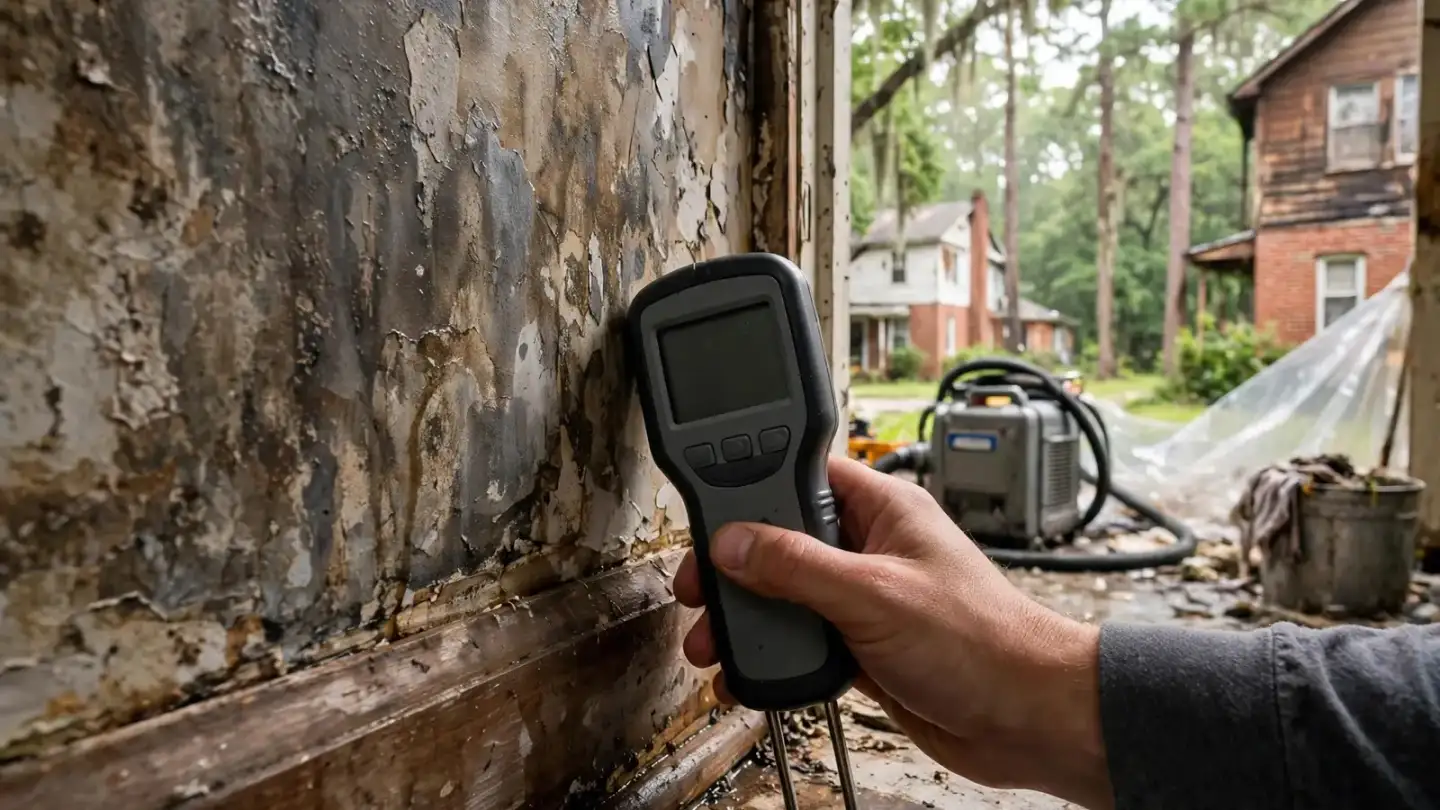
New paint and drywall over damp or sooty framing tend to fail. Moisture readings and a clean wipe test should come first.
The restoration process
What fire restoration usually looks like, step by step
- 1
Step 1
Secure the house
Broken windows, forced doors and roof openings are covered to keep out rain and intruders.
- 2
Step 2
Document everything
Every room, the attic and the crawlspace are photographed and measured for your insurer.
- 3
Step 3
Remove water
Firefighting water is extracted and drying equipment set up, with daily moisture readings.
- 4
Step 4
Sort contents
Furniture, clothing and keepsakes are triaged: cleaned on site, packed out for specialist cleaning, or listed as lost.
- 5
Step 5
Clean soot and smoke
Residue is removed dry first, then washed, from ceilings down.
- 6
Step 6
Treat odor
Remaining odor is neutralized and surfaces sealed where needed.
- 7
Step 7
Repair and rebuild
Damaged materials are replaced, with permits from Mecklenburg County Code Enforcement where required [3].
Charlotte neighborhoods
Charlotte neighborhoods we cover
Each neighborhood page explains how local housing affects fire recovery.
 Service area
Ballantyne
Fire, smoke and water recovery for Ballantyne's two-story homes, townhomes and apartments in south Charlotte.
Learn more Service area
Dilworth
Fire, smoke and water recovery for Dilworth's bungalows and Colonial Revival homes near East Boulevard and Latta Park.
Learn more Service area
Myers Park
Fire and smoke recovery for Myers Park's large Tudor and Colonial Revival homes along Queens Road and the Nolen-planned streets.
Learn more Service area
Plaza Midwood
Fire, smoke and water recovery for Plaza Midwood bungalows, infill townhomes and homes near Central Avenue.
Learn more Service area
SouthPark
Fire, smoke and water recovery for SouthPark ranch homes, split-levels, condominiums and townhomes.
Learn more Service area
University City
Fire, smoke and water recovery for University City apartments, townhomes and single-family homes near UNC Charlotte.
Learn more
Clean, seal or replace?
Which materials usually survive a fire
| Material | Usually | Depends on |
|---|---|---|
| Painted plaster and drywall | Cleaned and sealed | Heat damage and water exposure |
| Hardwood floors | Dried and refinished | How long they stayed wet |
| Carpet pad | Replaced | Almost always holds water and odor |
| Attic insulation | Replaced | Acts like a filter for smoke |
| Clothing and linens | Cleaned | Heat damage |
| Mattresses | Replaced | Deep odor and particles |
| Electronics | Cleaned by specialists | Residue inside the case |
Charlotte specifics
What makes fire recovery in Charlotte different
Charlotte's housing spans more than a century. Early twentieth-century neighborhoods such as Dilworth, Myers Park and Plaza Midwood have plaster walls, heart pine floors, brick fireplaces and crawlspaces, and parts of them are historic districts where exterior changes may need review. Mid-century ranches around SouthPark often have attic ductwork and materials that should be tested for asbestos before removal. Newer homes in Ballantyne and University City have open two-story layouts, engineered framing and synthetic materials that change how smoke spreads and how framing should be checked.
The climate matters too. Hot, humid summers slow drying and speed up mold growth, and summer thunderstorms test temporary roof tarps. [2] Building, electrical, plumbing and mechanical permits for repairs are issued by Mecklenburg County Code Enforcement [3]. A contractor who knows these local details can plan the job around them. Our fire restoration services overview and fire damage FAQ explain more.
Guides
Plain-language fire recovery guides
Short, practical guides for the questions Charlotte homeowners ask most after a fire.
- Guide
Is it safe to stay after a fire?
How to decide whether a home is safe to sleep in after a fire, and who should stay away until it is cleaned.
Read the guide - Guide
Smoke odor that won't go away
Why smoke smell lingers or returns after a fire, and how to find and remove the hidden source.
Read the guide - Guide
Soot on walls and ceilings
What soot patterns on walls and ceilings mean, and how they are cleaned without smearing.
Read the guide - Guide
What to do after a house fire
A step-by-step checklist for the first hours and days after a fire, from safety to insurance to cleanup.
Read the guide - Guide
Working with your insurance adjuster
How a fire insurance claim works, what to document and how to work with the adjuster.
Read the guide
FAQ
Fire damage restoration questions from Charlotte homeowners
How does calling this number work?
Your call is connected to an independent local restoration contractor who speaks with you on that call. We do not collect your details, send forms or call you back.
Do you do the restoration work yourselves?
No. This website is a referral service. The work is done by independent contractors, and any agreement is between you and the contractor.
Which parts of Charlotte are covered?
Calls from 29 Charlotte ZIP codes can be connected, including Uptown, Dilworth, Myers Park, Plaza Midwood, SouthPark, University City and Ballantyne.
How soon should cleanup start after a fire?
As soon as the fire department releases the home and your insurer has been notified. [4] Drying and soot removal both work better when they start early.
Will my insurance cover fire restoration?
Fire, smoke and firefighting water damage are commonly covered by homeowners policies, but coverage depends on your policy. Talk to your insurer and document everything.
Can smoke damage be cleaned, or does everything have to be replaced?
Many surfaces and belongings can be cleaned. Porous items such as insulation, carpet pad and mattresses are often replaced. An assessment decides what is worth cleaning.
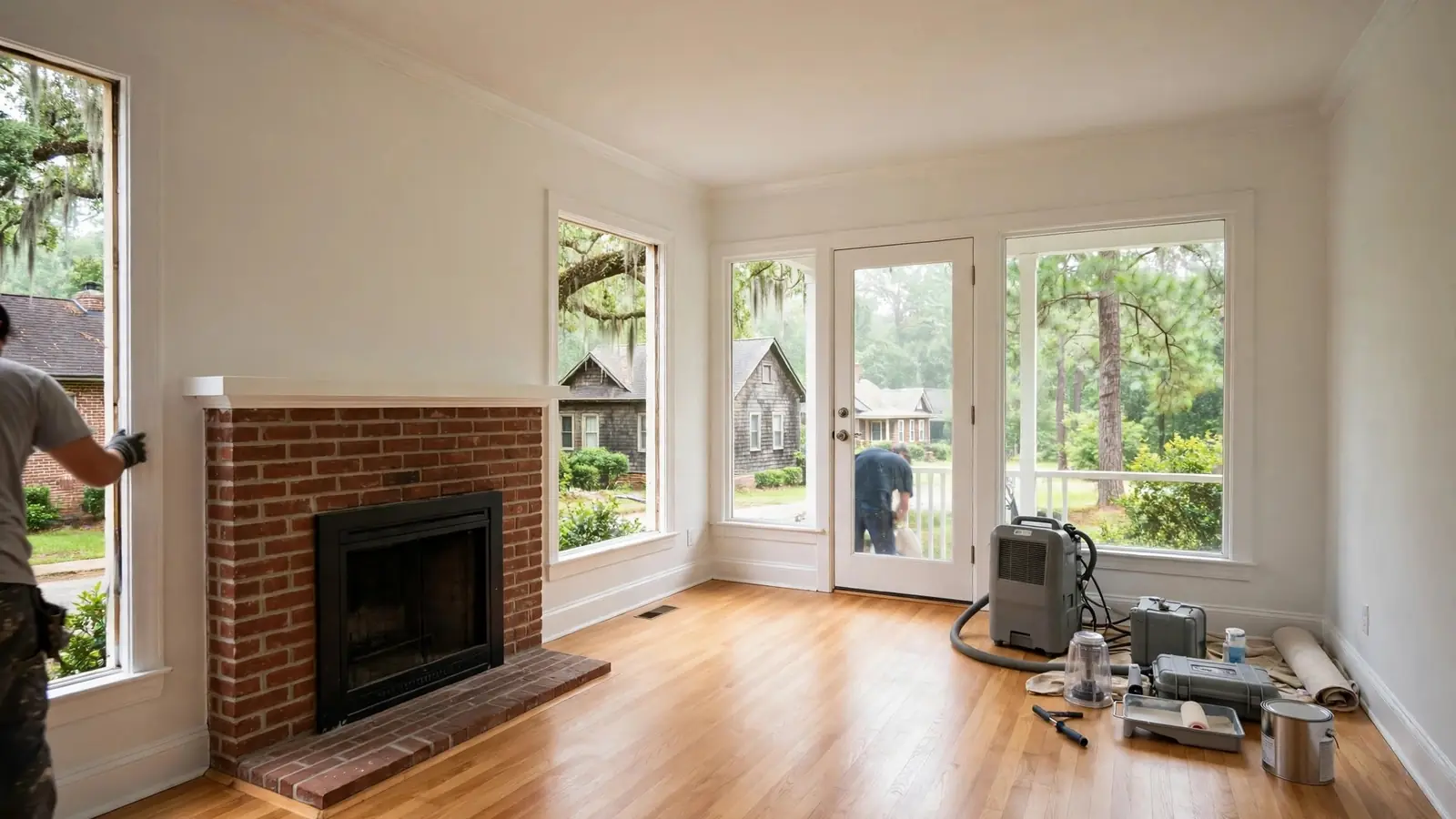
Call to talk with a Charlotte fire restoration contractor
Your call connects to an independent local contractor who can talk through securing, drying, cleaning and restoring your home on that call.
Sources and citations
Keep reading